Mar 20, 2012

Ad-supported apps leave smartphones in high-power states, drain batteries

Apps can stick hardware into a high-power-usage state even when they're not in use, resulting in excess power use.
If you find your phone is often low on HP Pavilion DV1327AP battery, the free apps you use may be to blame, according to a new study. Using a monitoring tool they developed, the authors of the study—two researchers from Purdue University and another from Microsoft—found that serving ads and collecting data inside an app results in excessive use of the hardware components inside a smartphone. These parts of free apps will turn on components like the 3G chip or GPS and cause them to stay on well after an information transaction has been completed, resulting in unnecessary power loss.
Most smartphones can show a basic breakdown of which resources are consuming the LG LB52113D Laptop Battery life (display, Wi-Fi, individual apps, etc.), but the way in which individual apps use that power is more opaque. To unpack the details at this level of power consumption, three researchers developed a tool called "eprof," a "fine-grained energy profiler." Eprof can track power used at the level of individual threads as well as routines running in an app, and can also track what the authors call "asynchronous power behavior."
Tracking an individual piece of software's activity—when processes stop and start, for instance—is contained, so it's easy to say how much power they use in that regard. But the authors found that tracking the hardware was more subtle, as many apps seem to stir hardware into action without turning it off right away, or ever. For example, the authors note the Wi-Fi and 3G chips may start up to communicate an app's data, and then remain in a high-power state even after the app has closed.
Likewise, smartphone OSes also include "wakelock APIs," which allow apps to prevent different pieces of hardware from sleeping, such as an app that wakes the CPU to check for new messages or a video application that stops the screen from sleeping while playing a movie. Items like the camera and GPS presented a similar problem: the researchers found that apps that use these devices start them up and put them in a high power-consuming state, and the hardware will sometimes continue this way until explicitly turned off by another service.
All of these actions mean power consumption triggered by one app can extend beyond when an app is finished using a piece of hardware and overlap into another, making good power accounting tricky (the authors note that this kind of SONY VAIO VGN-FE45G/W battery consumption, known as "tail energy," is being studied to reduce its consumption). For the purposes of this study, the authors account for the energy use triggered by an app, even if it extends beyond the period of app use.
Using eprof to monitor app power use on an HTC Passion running Android 2.3, the researchers made a few discoveries. In a study of the free version of Angry Birds, the authors found that the third-party ad generator and data aggregator Flurry consumes 45 percent of the app's energy tracking the user's location and serving ads to the app. But of that 45 percent, uploading the information and downloading the ads over 3G was only a 2KB transaction, taking 1 percent of the app's energy.
After the data exchange, the researchers found that the 3G chip continued to eat up energy, and it consumed another 24 percent of the total. Meanwhile, the core CPU-intensive thread that actually runs the program consumed 18 percent. Once the app was closed, a thread called HeapWorker performed cleanup and closed a socket, pushing the 3G chip into action and creating another tail that used 28 percent of the total energy.
The app Free Chess showed similar energy use excesses. Fifty percent of the app's energy went to running the third-party ad creator AdWhirl, and of that 50 percent, around 5 percent was used to download and render the ads; the rest was tail energy used by the 3G chip.
In total, 80 percent of the energy Angry Birds used went to I/O components (3G and GPS), and 77 percent of Free Chess's did. Others, like the New York Times app (67 percent) and MapQuest (72 percent) used somewhat less on components that had been triggered into a high power state by a short task, but the difference these states make are significant.
One simple lesson here is that if you find yourself drinking your SONY VGP-BPS13/S battery dry by 7pm every day, springing for the paid versions of apps that don't need to use extra energy to serve you ads could help. The difference could be significant, depending on how much time you spend on ad-supported apps or, to a lesser extent, ones that perform frequent exchanges with GPS and data collection services like Flurry.
More importantly, there is some optimization to be done on the part of app creators. We can fault smartphones for skimping on  PA3399U-2BRS battery size, but all the milliamp-hours in the world can only do so much good when apps use two to three times as much energy to collect data and serve ads as to run the actual program, all because these services amp up hardware components to high power states and let them stick there for too long. The authors suggest that eprof could be combined with static analysis to optimize energy use, as well as with smartphone OS schedulers to make them more aware of when components are using energy, but not actually in use.

Mar 14, 2012

The Fixed Lens Comes Again

The modern camera is undergoing a transformation like the fashion lines of the world: retro is in.  As one who is usually oblivious to the changing nature of attire (what, men don’t wear hats anymore?) even I can’t help but be impressed. Not only do the cameras look like something Megan Gale would be proud to swing from her shoulder or Paris Hilton strap to her poodle, but some old ideas are resurfacing to give substance to all the style. 

Olympus  gave rise to this when they released the first digital PEN camera (of which the two current versions are the E-PL3 and E-P3) designed looked like the old film PEN camera that was originally released in 1959.  Even Ted’s itself only goes back to 1970 – probably explaining the hirsute moustache of the man himself.  The idea of the digital PEN’s was to recycle the same idea as the half-frame SLR that inspired them – to reduce the weight and size of the regular SLR’s and inject some of the fun back into the idea of photography.


Recently, at the Photokina trade show in Germany, Fuji unveiled the X100, which looks like something a Soviet spy might have left behind jumping back over the Berlin Wall.  It even has traditional dials for adjusting shutter speed and the aperture value.  It is, however, the fixed f/2 lens that generates the excitement alongside the nostalgia. The fixed lens, especially a 50mm,  was at one point  the standard "prime"  that went with your camera body. Today it is usually the 18-55 zoom. The fixed lens fell out of favour like floral shirts and bell bottoms. The zoom came in on the promise that you didn’t have to move to get closer anymore.


The difference, or the main one at least, like we touched on last time, is the amount of light a fixed lens can let through compared to a standard zoom plus the increased ability to manipulate depth of field.  Everyone with a DSLR should have a lens with a fast aperture, so much so that the majority of people who buy the ubiquitous “twin kit” packages would be better off if the second lens was something like the Nikon 35mm or Canon 50mm 1.8 instead of the telephoto lens.
Panasonic and Sony have recognised this with, for example and respectively, the Panasonic Lumix GF2 and the Sony NEX 5 that are driving their sale results.  It’s worth keeping in mind when you’re tossing up your next purchase because for anyone with creative results in mind will usually be better served by a fast lens rather a standard zoom.  Ask us at Ted’s if the idea is worthwhile for your situation, or ask me – I’ll be the one in the hat.  

Mar 11, 2012

Battery maker struggles to spend US funds

High quality global journalism requires investment. Please share this article with others using the link below, do not cut & paste the article. See our Ts&Cs and Copyright Policy for more detail. Email ftsales.support@ft.com to buy additional rights.
The company is meant to draw its remaining $121m in funds from the Department of Energy by the end of the year, but is seeking to extend access to federal funds, because it only plans to invest $30m this year.
“This is a new business and it’s been difficult to accurately predict demand,” said Dave Vieau, A123’s chief executive. “We’re not looking to invest heavily in new capacity right now, and we’re optimistic the Department of Energy will extend the deadline for us to take up funds.”
A123, which develops laptop batteries used in the Fisker Karma electric car and GM’s planned Spark model, lost $37.6m in the last three months of 2011, up from $9.3m in the same quarter of 2010.
Unsold inventory doubled over the year to more than $100m after Fisker stopped buying camera batteries, as demand for its electric cars disappointed. Unsold inventory now accounts for almost a third of A123’s total assets, while unpaid customer bills account for another seventh. The company burned through $40m of cash in the last three months of 2011, leaving it with just $186m at the end of the year.
Shares in A123 fell 2.5 per cent to $1.56 and the company’s market capitalisation has collapsed since shares touched $25.77, shortly after its initial public offering in late 2009.
Another electric acer laptop battery maker, Ener1, which received $118m in stimulus grants, filed for bankruptcy earlier this year, although it has since emerged from Chapter 11 proceedings, while GM has suspended production of its Chevrolet Volt electric car because of weak demand.
A123 says it anticipates to work off unsold inventory and expects Fisker to place orders for new dell batteries in the second quarter, once the company has sold enough cars to work through its unsold inventory.
After recently announcing deals with BMW and Tata for proposed electric vehicles, A123 also expects that no single customer will account for more than 15 per cent of revenue going forward, leaving it less vulnerable to another abrupt cancellation. But analysts were unconvinced.
Battery makers are in a bind. They have no choice but to build out capacity to meet orders from carmakers, but sales may disappoint once products are launched,” said Theodore O’Neill at Wunderlich Securities.

Mar 9, 2012

A123 Develops Lithium Ion Starter Battery

WALTHAM, Mass. -- A123 Systems (Nasdaq:AONE), a developer and manufacturer of advanced Nanophosphate® lithium iron phosphate laptop batteries and systems, today announced production contracts for the company's 12V Engine Start Battery with three leading European automakers, including McLaren Automotive for the MP4-12C and a major German OEM that will use the battery in a 2013 model year passenger vehicle. A123's Engine Start Battery is designed as a replacement for absorbent glass mat (AGM) and other lead acid batteries, providing a lighter-weight, longer-lasting solution for micro-hybrid functionality that enhances vehicle performance, improves fuel economy and lowers total cost of ownership. A123 is also developing next-generation designs that are intended to further reduce the cost of its Engine Start acer Battery to make it applicable to a wider range of vehicle applications.
"The market for micro hybrids is growing rapidly, especially as automakers develop systems to help them meet higher government standards for fleet fuel efficiency. We believe that our lithium ion Engine Start Battery enables OEMs to maximize the performance and improve the fuel economy of their vehicles by providing a move advanced, lighter-weight and longer-lasting replacement for AGM lead acid sony laptop batteries," said Jason Forcier, vice president of the Automotive Solutions Group at A123. "We are gaining significant momentum in this market through our production contracts with McLaren and two other major European automakers, and we believe that we'll be able to further enhance our solution to enable additional automakers to cost-effectively deploy our Engine Start Battery across a wider range of passenger and commercial vehicles."
According to Lux Research, the global market for micro-hybrids is projected to reach more than 39 million vehicles in 2017 and create a $6.9 billion market for energy storage devices. A123's Engine Start Battery is designed as a drop-in replacement for AGM and other lead acid camera batteries, leveraging the company's automotive-class lithium ion cells to deliver a number of significant economic, performance and environmental benefits for passenger and commercial vehicle applications, including:
Greater Charge Acceptance Rate—A123's lithium ion Engine Start Battery is designed with a greater charge acceptance rate than AGM lead acid, enabling it to charge up to 10 times more quickly and contributing to a fuel economy improvement of 50 percent or greater compared with lead acid as reported by customers.

Reduced Weight—A123's Engine Start dell laptop Battery weighs less than half of comparable lead acid batteries, helping to reduce vehicle emissions and enhance driving performance.

Extended Life—The extended calendar and cycle life inherent to A123's Nanophosphate technology enable the micro hybrid to last at least twice as long as AGM lead acid batteries, resulting in minimal maintenance and lower total cost of ownership.

Minimal Environmental Impact—A123's Engine Start laptop Battery charger offers reduced total carbon emissions compared to lead acid and do not contain lead or any other hazardous materials. By replacing lead acid batteries with A123's solutions, customers can reduce the environmental impact of their systems, helping its customers promote their green initiatives and sustainability goals.

Feb 27, 2012

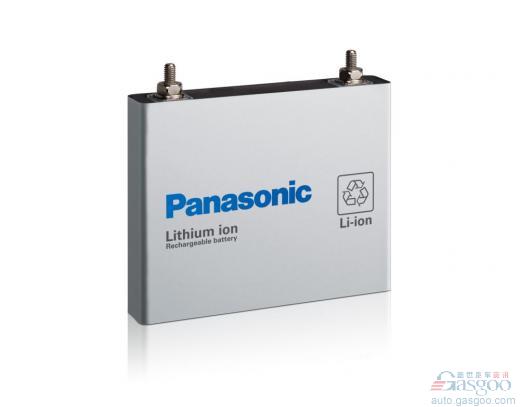
Japan Panasonic lithium-ion batteries supplied to Ford

日本松下向福特供应锂离子电池K-car information Matsushita Group has announced that its Ford Motor Company will be hybrid and plug-in hybrid supply lithium-ion laptop battery.
Ford models on sale soon, including the Fusion Hybrid, the hybrid of the C-Max Fusion Energi plug-in hybrids, and the C-Max Energi plug-in hybrids will be configured with a gasoline engine and Panasonic supply the lithium-ion camera batteries.
Due to the complexity of the production cell technology, Panasonic is usually the case in Japan, domestic production of automotive lithium-ion acer laptop battery. According to the Nikkei newspaper reported Panasonic's major customers include Volkswagen, Toyota and Ford are in the production of electric cars and hybrid plans, so the Panasonic is currently considering the establishment of lithium-ion dell laptop battery supply system in China.
Nikkei Shimbun reported that Panasonic's market share in the global automotive lithium-ion hp laptop battery market up to more than 20 percent, ranking first.

The Changzhou EGing Photovoltaic solar module production capacity accounted for the National 1/6

Jiangsu, China, February 28 by the enterprise successfully listed on the opportunity billion Optoelectronics held on February 26 global customers and suppliers will thank more than 350 customers and suppliers from Germany, Britain, France and more than 60 countriesgathered billion Optoelectronics, Mayor Yao Xiaodong invited for outstanding customer award and delivered a speech.
Yao Xiaodong, Changzhou city, one of the earliest photovoltaic technology industry and solar industry gathering. PV and supporting enterprises, more than 150 production to break through the 5 GW solar modules production capacity to about capacity of the sixth, shipments accounted for about one fifth. The context of complex international and domestic economic situation, the city's photovoltaic enterprises surmount, change ideas, solve problems, in 2011, above-scale photovoltaic enterprises realized sales income of 37 billion yuan, profits and taxes 4.94 billion yuan, profit 30 billion, and achieved good performance.
Yao Xiaodong pointed out that the Billion Optoelectronics listing is successful, the country only in the Shanghai A-share listed pure solar cell module production enterprise, is the result of Eging photoelectric tenacious hard work, innovation and development. He hoped that the billion Optoelectronics take this opportunity to continue to increase investment, and standardize management, innovation and entrepreneurship, towards billion enterprise, Rise of the "dream forward, Changzhou, Jintan accelerate the realization of" second lead "to make more a large contribution.
The same day, the well-known enterprises businessmen from Germany sent then Ltd., Australia Wa Erken Energy Group, has 500 MW of monocrystalline silicon vertically integrated into the Billion Optoelectronics, 500 megawatts of polysilicon, the vertical integration of East and West plant direct experience of enterprise orderly production scene
about author: we have two store li-ion battery. our brand have laptop battery, camera battery, camcorder battery , battery charger and  all kinds of power tool battery. we sale battery at usa, uk, ca, and au. all the battery cheap and high quality. brand new replacement battery. buy it from here save 30% money and save time. 30 days money back if you don't like our products.

Feb 23, 2012

What every Acer Aspire 7735Z battery user should know? 8 cells 65Wh

The Acer Aspire 7735z battery uses the highest quality cell,and ensure 100% to your digital camera.
The laptop battery is designed to meets or exceeds the original manufacturer specifications for your Acer Aspire 7735z camera.
Be sure to check out our tremendous 1 year warranty, 30 days money back guarantee for this Aspire 7735z battery.
The replacement Acer Aspire 7735Z battery is specially designed for the original 12-Cell Acer Aspire 7735Z battery.These high quality replacement batteries are engineered to meet or exceed original specifications assuring better performance and longer life. The quality of this acer laptop battery is in high grade quality and certified by CE and RoHS. You can reassure of purchasing it!

1.How should I prepare my new battery?
Batteries comes partially charged. You can use the Lithium-ion(Li-ion) battery right away and charge it when needed, But prime new Nickel-based battery by putting on a 14-16h charge.
2.Should I remove the AC adapter when my Acer Aspire 7735z laptop is not in use?
It does not matter. The charger automatically cuts the charge current when the battery is full. A laptop may be connected to the AC when not in use.
3.Should I remove the Acer Aspire 7735z battery from the charger when full?
Yes, it is best to remove the Acer Aspire 7735z battery pack from the charger when full. A prolonged trickle charge to a fully charged battery can be harmful.
4.Can I damage my Li-ion battery if incorrectly prepared?
No; Li-ion is forgiving to partial and full charge. No priming is needed when new.
5.Should I use up all Acer Aspire 7735z battery energy before charging?
No, it is better to recharge more often; avoid frequent full discharges. To maintain the optimum performance of Acer Aspire 7735z battery pack, it is highly recommended to circle (fully discharging and recharging) it at least once a month.
6.Should I charge my battery partially or fully?
Full charge termination occurs by reading the voltage level and charge current. Fully charged a Li-ion battery is safe and does not cause harm. However, regarding the Nickel-based batteries, allow full charge without interruptions. Repeated partial charge can cause heat buildup. (Many chargers terminate charge by heat. A fully charged battery will re-heat, causing overcharge.)
7.Should the Acer Aspire 7735z battery be kept charged when not in use?
Best to store at 40% charge or 3.75-3.80V/cell open terminal. Store in a cool, dry and clean place. Do not fully deplete battery because Li-ion may turn off its protection circuit. However,NiMH battery can be fully depleted and recharged. Priming may be needed.
8.What should I know about chargers?
Charger should apply full charge. Avoid economy chargers that advertise one-hours charge. Fastest full-charge time: 2-3 hours.
9.What are the allowable charging temperatures?
Rechargeable batteries can be used under a wide temperature range. Slow charge: 0°C - 45°C (32°F - 113°F) Fast charge: 5°C - 45°C (41°F - 113° F) Temperature sensor may prevent charge or cut off the charge prematurely. Charging a hot battery decreases the charge time. The battery may not fully charge.

Feb 16, 2012

Replacement COMPAQ Presario CQ50 Series Laptop Battery

  • Item #GBNHP053US
  • TypeLi-ion
  • Capacity9600mAh
  • Volt10.8V
  • Dimensions218.40 x 60.55 x 42.7mm
  • ColorBlack
  • Weight722.45g

Compatible Battery Code:

  • HP HSTNN-IB79
  • HP HSTNN-Q34C
  • HP HSTNN-C51C
  • HP HSTNN-C52C
  • HP HSTNN-C53C
  • HP HSTNN-W48C
  • HP HSTNN-W49C
  • HP HSTNN-W50C
  • HP HSTNN-DB72
  • HP HSTNN-IB72
  • HP HSTNN-UB73
Brand new high quality Li-ion replacement compaq presario cq50 battery that are manufactured to meet or exceed the specifications of the original brand manufacturer and provide extended runtime with no 'memory effect', so you can charge it anytime. The battery for compaq presario cq50 will help you power up your laptop in the office, business trips or vacations. Keep an extra Easy-To-Carry handy battery and enjoy the true portability of your laptop computers. This compaq presario cq50 laptop battery replacement is individually tested and full one year manufacturer warranty.
store product brands:

Feb 14, 2012

4800mAh Li-ion Replacement SONY VGP-BPS13/S Laptop Battery

You are Here: Home > Laptop Battery > SONY Laptop Battery > VGP-BPS13/S

  • Item #: BBNSN037US


  • Type: Li-ion


  • Capacity: 4800mAh


  • Volt: 11.1V


  • Dimensions: 204.20x47.10x20.60mm


  • Color: Silver


  • Weight: 375.2g


  • Inventory: In Stock
    Regular Price: 85.79
    Buy it Today, save 30%!
    Special Price: US $65.99


  • Product Description
    •   1 year warranty, 30 day money back, 100% Brand new.
    •   The shipping cost for each order is $10.
    •   Items are generally shipped out the same business day after you have checked out.
    •   Free Ground Shipping with $95 and over.
    •   Any questions, please don't hesitate to contact us.
    This Laptop Battery also compatible with the following SONY Part Numbers:

    Feb 13, 2012

    Laptop battery charging and set

    Now a lot of friends in the forum to ask your own to buy a new laptop battery need for continuous discharge and then charge three hours? Laptop on an external
    Power supply in case the need to remove the battery? That I for all details in this regard.
        What is battery memory effect?
        The memory effect is an effect of the crystallization of the battery because the use of the contents of leaving the battery. Usually only occurs in nickel-cadmium batteries, nickel-metal hydride power
    Pool less, lithium does not have this phenomenon. CAUSE is part of the battery repeated charge and discharge is not entirely due to Cause the PANASONIC CGR-602A Charger battery to temporarily
    Of capacity is reduced, lead to the notebook using the battery standby time.
        Be seen from the above general notebook is a lithium battery, which means that basically no memory effect. Some people say that three times before the charge
    Power must charge more than a dozen hours in order to fully activate the battery, I do not think this is necessary, of course, the previous capacity for a new battery
    Than the future will be reduced, it is the battery of long-term storage activity material and surface passivation, resulting in, I think that the previous charging full after a
    Two hours is enough, of course, the charging time with your laptop charging current and Kodak dx4530 Battery capacity are subject to change, in short, not
    Charge as long as possible, so not only can not activate the battery, on the contrary will affect the life span.
        The world surface of the notebook use lithium batteries, nickel-cadmium batteries or nickel metal hydride battery users and for some of the old second-hand
    The battery should be used no electricity to recharge, or in a notebook on the first discharge. Do not power on a battery to repeat the charge in order to avoid the memory effect
    Generation. To battery completely discharge the Acer Aspire 5235 Battery must be placed about 24 hours standby, completely discharge and then fully charged, so many times to loop, ie,
    Return to battery capacity, unless the battery has been damaged. However, in order to avoid this phenomenon, it is recommended that consumers choose a lithium battery.
        Automatic power protection for notebook
        Notebook manufacturers in the notebook battery automatic power protection technology, which is when the battery charge reaches 90% -95%
    They do not charge the battery.
        In fact, this depends on when you use an external power supply is not need to charge the battery, the ACER Aspire 5310 Laptop AC Adapter battery charge is directly related to life.
    We know that lithium is relatively less number of charge cycles, Li-ion battery charge and discharge times under normal circumstances is a fixed number of charge cycles is generally only
    About 500 times, at most not more than 800 times. Each of our battery to recharge a battery, thus reducing the number of a rechargeable. Not
    Too many notebook manufacturers are now taking into account the vulnerability of the battery, the battery protection technology, does not meet certain conditions.
    Will not be charged. We try to use an external power supply if you are using half-way multiple plug power supply, and the laptop built-in battery
    Did not pull out, let the Canon Eos 1100d Battery life shortened because each external power access is equivalent to a battery charge. The best charging turn off the notes
    The computer, the battery can be fully charged, do not unplug the power drop in the charge. Charge off will start charging to reduce more than 30% of the charge
    Time, and can extend battery life. Best 30 minutes after charging is completed.
        It is easy to run out of battery charge, most laptops only a battery, therefore, part of notebook computer manufacturers
    Made a quick charge function, allowing users to run out of power with the fastest speed to supplement electrical energy. For example, Dell's notebook computers have
    The ExpressCharge function, you can charge for more than 90% within one hour. Why not 100%? Because the charge and discharge characteristics of lithium,
    If regular rapid charging to 100%, a report could shorten Canon Lp-e5 Battery life, to extend the power behind the 10% will be changed from the previous fast charge to slow charge
    Battery life.
        Even so, when you use an external power supply for a long time using the computer, we recommend that you unplug the battery, battery temperature is also the bane of
    One of the laptops in use have a certain temperature, the battery is very harmful. Of course, if you did not own the battery
    Sure, then I suggest you pull down your KODAK Easyshare M873 charger battery and then use an external power supply, because not all battery protection circuit.